Saturday, September 29, 2012

Hundreds eggs of Egyptian Goose has been eaten by one fisherman at Nuba Lake

You can’t imagine how human behaviour can be destructive unless you faced with one of these destructive behaviour . During the period  from 23rd March  to 4th April 2011  we ( Esmat , Nasir , Mohanad  ,  Officer Suliman Hakim and his soldiers )  were surveying Nuba lake in Northern State in the border with Egypt  to assist our colleague  Ismail  in his Nile Crocodile study . The survey success depends mainly on our local guides Ali Balla (expert in crocodile behaviour and distribution) and lovely Ahmed Ibrahim( boatman).  
During our normal survey, we stopped at small island to monitor crocodiles from that Island. We found about 10 nests of Egyptian goose but only two of them had eggs (11 and 14 eggs in each) and we thought for the first time that the empty nests may hatched but no broken egg shell remained near the site
Egyptian Goose nest on the ground-  Nuba lake 26th March 2011

 While we were talking, a fisherman stopped by the island with his boat and we noticed that he had dozen of geese eggs in his scarf and immediately the mystery resolved. He knew very well the site and the rest of eggs in the two remains nests but he didn’t know that we are conservationists as he offered us to take some eggs
complete nest in the fisherman scarf- Nuba Lake 26th  March2011

The big surprise waiting us when we arrived his camp on an island just about 100 meter from our island. We shocked by the hundreds broken eggs around the camp and 25% had dead embryos. He simply explained that ‘ I felt boring from eating fish ,so I decided to change to bird’s eggs’. We clearly noticed that he didn’t collect  these eggs from one site due to the large numbers of broken eggs and when he stopped at the island ,he was already carried some eggs.
He claimed that he didn’t know it is prohibited . At this point we felt guilty too as we didn’t have awareness programmes for them inspite the importance of the lake for migratory birds and crocodiles as well
part of the broken eggs- Nuba Lake 26th March 2011
Egg with dead embryo- Nuba Lake 26th March 2011
 Thousands of migratory Egyptian goose inhabiting the lake during winter while large numbers were seen molted and bred as well as spur-winged lapwing in the islands scattered throughout the lake.
Pair of Egyptian Geese- Nuba Lake 28th March 2011
Egyptian Goose with chicks- Nuba Lake 28th March 2011
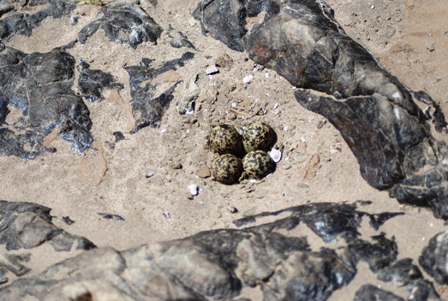
Ground nest of spur-winged Lapwing- Nuba Lake 28th  March 2011
 The Nuba lake is very wide with many islands scattered in the whole lake which used by birds and crocodiles for nesting. The eastern side of the lake is mountainous   while the wastern side mainly sandy with small hills. Species seen there were great white pelican, spur-winged plover  , little egret, African skimmer , Nile Valley sunbird , white-crowned wheatear, European turtle, whiskered tern, white-winged tern, squacco heron, mourning dove, laughing dove, lesser black-backed gull, grey heron  etc.........
Female white -crowned wheatear- Nuba Lake 29th March 2011
Whiskered Terns -Nuba Lake 29th March 2011
Black-winged Stilt- Nuba Lake 29th March 2011
Great White Pelican- Nuba Lake 29th March 2011
African Skimmer- Nuba Lake 29th March 2011
Squacco Heron- 29th March 2011
Senegal Thicknee- Nuba Lake 29th March 2011
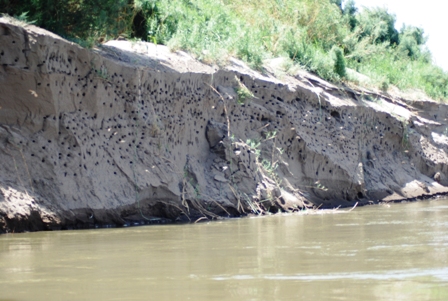
 While our boat passing near the sandy bank, we observed colony of sand martin in the sandy wall . During our returned back , we stopped at water pumping building to say hallo and filled some questionnaires . I noticed nest of Eurasian Crag Martin on the room wall.
Sand Martin colony on the sandy wall- Nuba Lake 30 March 2011
Eurasian Crag Martin nests on room wall- Nuba Lake 30 March 2011
 I always (Esmat) carry my mist net with me in my traveling incase we find suitable place for capturing birds for identification and ringing. We erected two mist nets beside bush area and small hill where many small birds flying. Some species captured such as Nile valley sunbird and lesser whitethroat
male Nile Valley Sunbird- Nuba Lake 1st April 2011
Lesser Whitethroat- Nuba Lake 1st April  2011


Tuesday, September 25, 2012

Dinder National Park(DNP) ..dry season 2011

Team of researchers (Esmat -Nasir- Mubarak- Gamar) from Wildlife Research Center made birding expedition to Dinder National Park during the dry season between 18th – 28th April 2011 . We arrived late at Galagu Camp (the main camp in the Park)  in the core zone where most of animals are congregated due to food and water abundance and the conservation measures. Group of passerines moving around Galagu Camp  near small water spots coming from tap water or waste water from the natural refrigerator (simple costruction using natural air for cooling). Group of cut-throated firefinch, African silverbill moving between water hole and trees branches as well as  wattled Starling, red-cheeked Cordonbleu and Greater blue-eared Starling.
Cut-throated Fire finch and African silverbill having sun bath- DNP 19/4/2011 
Greater blue-eared starling -DNP 19/4/2011
wattled starling in the middle(male)-DNP 19/4/2011
Pair of  Red-throated Bee –eater were seen on top branches of  green tree near the edge of Khor Galagu (stream)  beside  two little Bee-eater on the lower branches. On the opposite site of Khor Galagu there was a group of endangered Hooded Vulture roosting on Dom tree which always found in the riverine area
Red-throated Bee-eater -DNP 19/4/2011

Little Bee -eater -DNP  19/4/2011

Mixed group of hooded vulture and white-backed Vulture sharing a dead standing tree . Both species were uplisted to endangered according to IUCN Red List.
Endangered Hooded and White-backed Vultures on the same tree- DNP 19/4/2011

A remarkable Long Crested Eagle seen perched on the wooded fence of Galagu camp looking toward us. His long crest  waving with wind giving him more attraction.

Long -crested eagle- DNP 19/4/2011
Two mist nets were erected in the bush behind the camp looking for hiding species which sometimes hard to observe . Varied species were caught such as Ruppell’s Starling, Greater Honeyguide, White Headed Babbler , Northern Puffback, Grey-backed Camaroptera , Blue-spotted Wood-dove
Ruppell's Starling -DNP20/4/2011
Greater Honeyguide (Male) -DNP 20/4/2011
White-headed Babbler -DNP 20/4/2011
Northern Puffback (male)  - DNP 20/4/2011
Grey-backed Camaroptera-DNP 20/4/2011

Blue -spotted Wood-Dove- DNP 20/4/2011
  Through our birding, noticed that most of the mayas (wetlands) were dry out as we were in late summer and a few mayas were deep enough to hold water for long time such as Ras Amir and Birkat Eltamaseeh. Firstly we headed to Abdel Ghani maya which is about 1 km away from the Galagu camp and it seems dry out expect small water hole pumped  from anew underground well. Small group of birds gathering around the water all the time as the weather is very hot during that time of a year. European turtle Dove with mourning and laughing doves were seen  beside the migratory wood sandpiper, black-headed heron and open bill stork . many migratory species were seen during non-migration season living in the Park making understanding migration confused unless we have sustainable ringing and telemetry . Small group of woolly necked stork and cattle egret were feeding in the driest part of the maya . Hundreds of tufted guinea fowl hiding under the shade of big trees at maya’ edges .

European Turtle Dove , laughing dove and Mourning Dove -DNP 21/4/2011
Wood Sandpiper- DNP 21/4/2011


900 old weaver nests probably masked weaver were seen covering group of acacia nilotica at Wadd Elmatar Farsh( Qudahat).
Weaver old nests -DNP 22/4/2011
Our next direction was Ras Amir maya (lake) which is 14 km from Galagu camp and is the largest and deepest  maya in the park . Most of our birding concentrated in this maya due to the largest number of birds and species richness. On the way to Ras Amir , a female Ostrich with chicks running in front of our car  on the road  while the male was running in the opposite side trying to drive us away from them.
Female Ostrich with chicks - DNP 23/4/2011
Most the birds were congregated at south edges of the maya where short grasses and floated plants covering the water    surface. About 500 spur-winged goose , 200 white-faced whistling duck , 100 African Jacana while 100 grass hopper Buzzard soaring above.  African jacana preferred this maya due to the presence of floating plant which make it easy for the jacana to walk on the water using her long toes for balance.Also cattle egrets, open bill storks , black –winged stilts , mourning doves, northern masked weavers , laughing doves and spur-winged plover were there.
Spur-winged geese and White-faced ducks- DNP 23/4/2011
Soaring Grass Hopper Buzzard - DNP 23/4/2011
Ras Amir Maya covered with floating plants- DNP 23/4/2011
 
 By the end of the day,  we erected numbers of  mist nets to catch some birds during the night for ringing . The catching started directly after sunset by chasing birds towards the nets .  We caught some waterbirds and we ringed only migratory species as we have limited number of  rings .Species captured were pied King Fisher,  greater painted snipe and wood sandpiper .We did this two times chasing birds but after three hours the Park was completely dark  and our ranger started complaining as he is responsible for our safety and we started listening predators voices become more nearer ,then we decided to leave but  nets were left opened for the whole night.

We woke up early next  morning to check our nets and to release birds as early as possible  . Two nets were come down to the mud with heavy immature African Fish Eagle tangling in the net and it may be struggled for some time . We released the bird from the net and kept it for  a period of time to make sure he can fly well. Capturing is not hindered by predators but also the large number of bats caught in the net and leaving the nets with big holes .  Marabou storks were also slowly walking on the dry area near the fishermen camp searching for fish scraps.
Esmat releasing immature fish Eagle from the mist net - DNP 24/4/2011
Immature fish eagle take off - DNP 24/4/2011
Marabou Storks- DNP 24/4/2011
 We spent two days at Ras Amir then we headed next morning towards the western side of Dinder River . We stopped at Birkat Eltamaseeh which lies in the Dinder River bed near the main road crossing he sand ground of the river by spreading sorghum stems above the sand to prevent cars from being stuck in the sand.  Remarkable hamerkops were seen on the pond’s shores  with great white egret , spur-winged plover , Senegal thicknee, long –crested eagle and open bill storks. Pair of African fish eagle looking at water body from top branches of a big tree beside the pond.  Large number of animals depending on this pond as water source in this site (preys and predators) 
Hamerkop and Great White Egret- DNP 26/4/2011
Pair of Fish Eagle-DNP 26/4/2011
 Small water body remains at Gererissa maya supported by pumped water to keep animal in that side a live or to avoid animal traveling long distance and competing in specific area but a few species of birds were observed there such as black-headed Heron, pied crow, long-tailed starling , little egret, mourning dove and greater blue eared starling with warthog wallowing in the mud as he always did
Pied Crow - DNP 26/4/2011


Our next travel to Semaaya maya  far from the center in the wastern side of Dinder River but the maya  was dry out except small muddy area rich with fish . Fish eating birds were aggregated a round the mud such as herons , storks, pelicans . Hundred of snares were found left by the fishermen which make major threats to waterbirds probing in the mudd
Great white pelican competes with Marabou storks on fish- DNP 27/4/2011
Esmat and Nasir extracting snares from the ground- DNP 27/4/2011
 
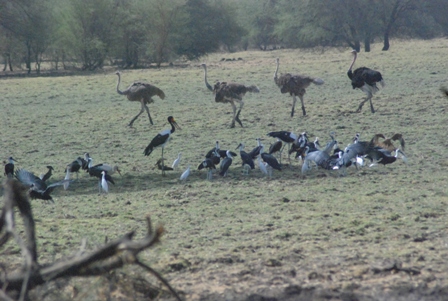
On the driest part of the maya at 11 am when the sun started to become more hot , we saw varied species sharing the narrow shade by the end of the maya . The group includes saddle- billed stork, woolly necked stork, cattle egret, black-headed Heron and truly migrant white stork. Group of ostrich also observed moving around.
Saddle-billed stork, woolly-necked stork, cattle egret, Hamerkop   with four ostrich
 Our camera was not so professional to capture very clear picture for far individual but it approved the presence of the species mentioned .

Wednesday, September 19, 2012

وضع الحلقات على الطيور بجزيرة ام شجيرة( كريس وعصمت)


قام تيم بقيادة كريس وود وعصمت الفكى  وبمعاونة ناصر يوسف  وعمر محمد النور وعبد الله عبد المحمود فى الفترة من 5-9 يناير 2012  ببعثة لوضع حلقات تعريفية على الطيور المائية بجزيرة ام شجيرة التى تقع فى مجرى النيل الابيض بولاية الخرطوم غرب غابة السنط . تستخدم الجزيرة كمحطة توقف وراحة للطيور المهاجرة القادمة من اوروبا واسيا وتعتبر من اهم المناطق الجاذبة للطيور.
تتغمر الجزيرة بالمياه كليا فى فصل الخريف وموسم الفيضان وتظهر مع انخفاض المياه فى شهر ديسمبر . الاف الطيور المهاجرة والمقيمة تستخدم الجزيرة كمنطقة راحة وتغذية فى فترة الشتاء وتنخفض المياه فى الجهة  الشرقية لعدة امتار وتظل عميقة جدا بينما تنخفض الجهة الغربية لمستوى ضحل جدا ويغلب عليها الطمى  ويمثل بيئة ملائمة لتغذية الطيور لاحتواءها على مواد عضوية وكائنات صغيرة وتكثر فيها الطيور الخواضة والتى تمثل العدد الاكبر فى الجزيرة. وهذا الطمى(الطين) اللزج يجعل من الصعوبة الحركة ووضع الشباك وتحتاج لاحذية طويلة او المشى حافيا لان مستوى الطمى يصل احيانا الى منتصف الساق.
Ringing Camp مخيم الفريق


تترك الشباك مفتوحة طول اليوم لضمان القبض على اكبر عدد لوضع الحلقات فى كميات مناسبة لانه هنالك انواع من الصعب القبض عليها مثل السقد المطوق والذى يشاهد باعداد كبيرة حول الخيمة فى المنطقة الجافة من الجزيرة تقدر بحوالى 1200 وبالرغم من الجهود المكثفة من التيم لقبض هذا النوع تم القبض على  طائر واحد  من هذا النوع . تم القبض على عدد بسيط من طيور الجرول() حيث شوهد سرب من هذا النوع ولكنه يتفادى الشباك بالطيران عاليا. ويعزى السبب  للاضاءة الكثيفة من المبانى القريبة من الجزيرة وكبرى الفتيحاب حيث تجعل الشباك مكشوفة للطيور وتسهل رويتها وايضا لظهور القمر بشكل كامل خلال تلك الفترة . الاعداد الكبيرة التى تم القبض عليها من انواع الزقزاق و دريجة الشاطئ والحرشنه.العدد الكلى للطيور التى تم وضع الحلقات عليها هو 242 طائر.
Curlew Sandpiper  دريجة الشاطئ معقوف المنقار


تم القبض على طائر من نوع الزقزاق كان قد تم وضع حلقة عليه فى يناير 2010  وهو من الطيور المهاجرة مما يدل على عودة الطيور المهاجرة لنفس الموقع سنويا  وتكتمل الدراسة لو تم القبض على احد هذه الطيور فى اوروبا واسيا لتاكيد الدراسة ومن هنا تنبع اهمية الحلقات المعدنية لدراسة هجرة الطيور.
الزقزاق وعليه الحلقة القديمة Little Stint with Old ring

تتواجد انواع اخرى كثيرة مثل ابو ملعقة (50 فرد) والفلامنجو الكبير(100) فى المياه الضحلة بينما تتواجد فى المياه العميقة انواع مختلفة من البط  والعدد الكلى للطيور فى الجزيرة كان حوالى 4576 طائر تتبع ل 33 نوع بينما تم تعدادها فى العام 2010 بحوالى 13000 طائر تتبع لحوالى 56 نوع ويلاحظ التدهور الواضح فى الاعداد والانواع بين السنوات.

Yellow Wagtail  ام قيردون


Species ringed الانواع التى تم القبض عليها ووضعت العلامات المعدنية عليها

1.       Little Stintالزقزاق الصغير
2.       Temminck’s Stint الزقزاق
3.       Curlew Sandpiper دريجة الشاطئ
4.       Whiskered Tern الحرشنة
5.       Greater Painted Snipe الشقنب الملون
6.       Common Snipe الشقنب
7.       Jack Snipe الشقنب الصغير
8.       Ringed Plover السقد المطوق
9.       Ruff الجرول
10.   Marsh Sandpiper  الطيطوى
11. Wood Sandpiper الطيطوى
12.   Yellow Wagtail ام قيردون
13.   Black-tailed Godwit
14.   Common Sandpiper الطيطوى
15.   Gull Bill Tern الحرشنة نورسى المنقار
16.   White –winged Tern الحرشنة ابيض الجناح

Ringing on Um Shugeira – Chris & Esmat

Between the 5th and 9th of January the two of us (Chris and Esmat) made a waterbird ringing expedition to um Shugeira Island in the White Nile in Khartoum. We were accompanied by 3 researchers  who were taking samples as part of their disease survey. The Nile is used as a flyway and stopover for many  Eurasian migrating birds and um Shugeira is an attractive stopover for many of them

 Um Shugeira is completely submerged during the flood season and only emerges from the waters as they drop in December. Many thousands of migrant and resident waterbirds use the island as a roost and feeding area during this time. The eastern edge of the island drops off into several metres of water but the western edge shelves very gradually creating large areas of shallow water and soft mud flats, ideal for the feeding birds especially waders which constitute the largest numbers in the island. This soft mud makes net inspection, especially at 2 am, somewhat difficult and without full length waders the only successful method is to go barefoot, all other footwear is sucked of your feet knee-deep mud. Esmat had waders, Chris did not
Ringing Camp, Um Shugeira 6/1/2012


We kept the nets open 24 hours a day for the whole time and managed a reasonable number of ringed waterbirds. As usual in this situation, there were a number of frustrating species. Every evening we had 1200 Common  Ringed Plover on the dried mud near where we were camped. In spite of our efforts we caught none there and only managed to ring a handful during the whole time. Ruff as usual were difficult to catch. There were several medium sizes flocks, but they managed to avoid the nets as well, and again we only caught a handful. The big disappointment  was our failure with the Black-tailed Godwit; there were numbers feeding and flying past our nets for much of the time, but we only managed to ring three birds of this species. This may be due to the bright full moon during those days which make the nets visible to birds. The most numerous species ringed were Little Tint, Curlew Sandpiper and Whiskered Tern. In total 242 birds were ringed. 
Curlew Sandpiper, Um Shugeira 6/1/2012

We had one recovery, a Little Stint that had been ringed in 2010 on um Shugeira. This was one of only about 50 birds ringed that year. This site fidelity was interesting in itself, and with the 242 birds ringed this year we are hopeful of some more recoveries next year. Of course the prize would be to have a bird recovered in the north.
Little Stint with an old ring, Um Shugeira 6/1/2012

Additional birds of interest were a solitary Osprey, flocks of 50  Spoonbills and a flock of  100 Greater Flamingo. In the deeper water beyond our nets were many ducks, predominantly Northern Shoveller, Northern Pintail and Eurasian Widgeon. The total number of waterbirds inhabiting the island during the survey was 4576 with species richness of 33 species dominant by waders.
Yellow Wagtail, Um Shugeira 6/1/2012


In general the ringing was a success and with the experience gained from this we hope to improve our “catch” in future.

Species ringed

1.       Little Stint
2.       Temminck’s Stint
3.       Curlew Sandpiper
4.       Whiskered Tern
5.       Greater Painted Snipe
6.       Common Snipe
7.       Jack Snipe
8.       Ringed Plover
9.       Ruff
10.   Marsh Sandpiper
11.   Wood Sandpiper
12.   Yellow Wagtail
13.   Black-tailed Godwit
14.   Common Sandpiper
15.   Gull Bill Tern
16.   White –winged Tern